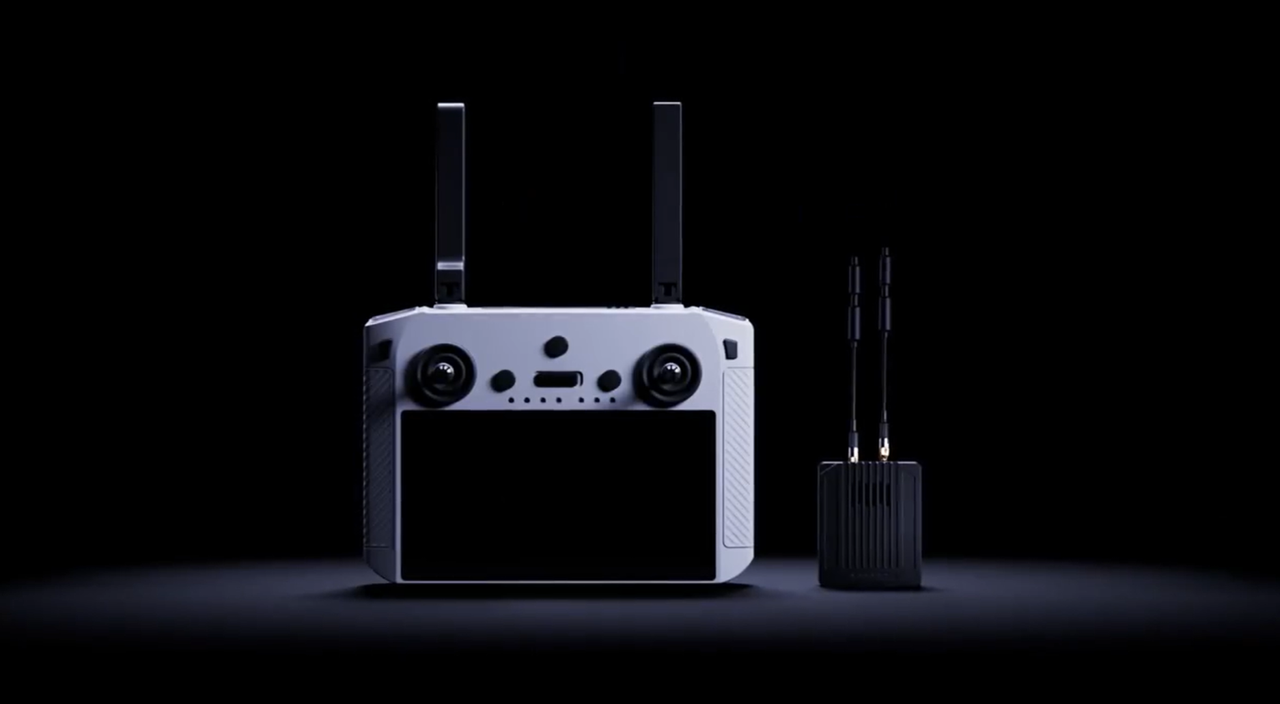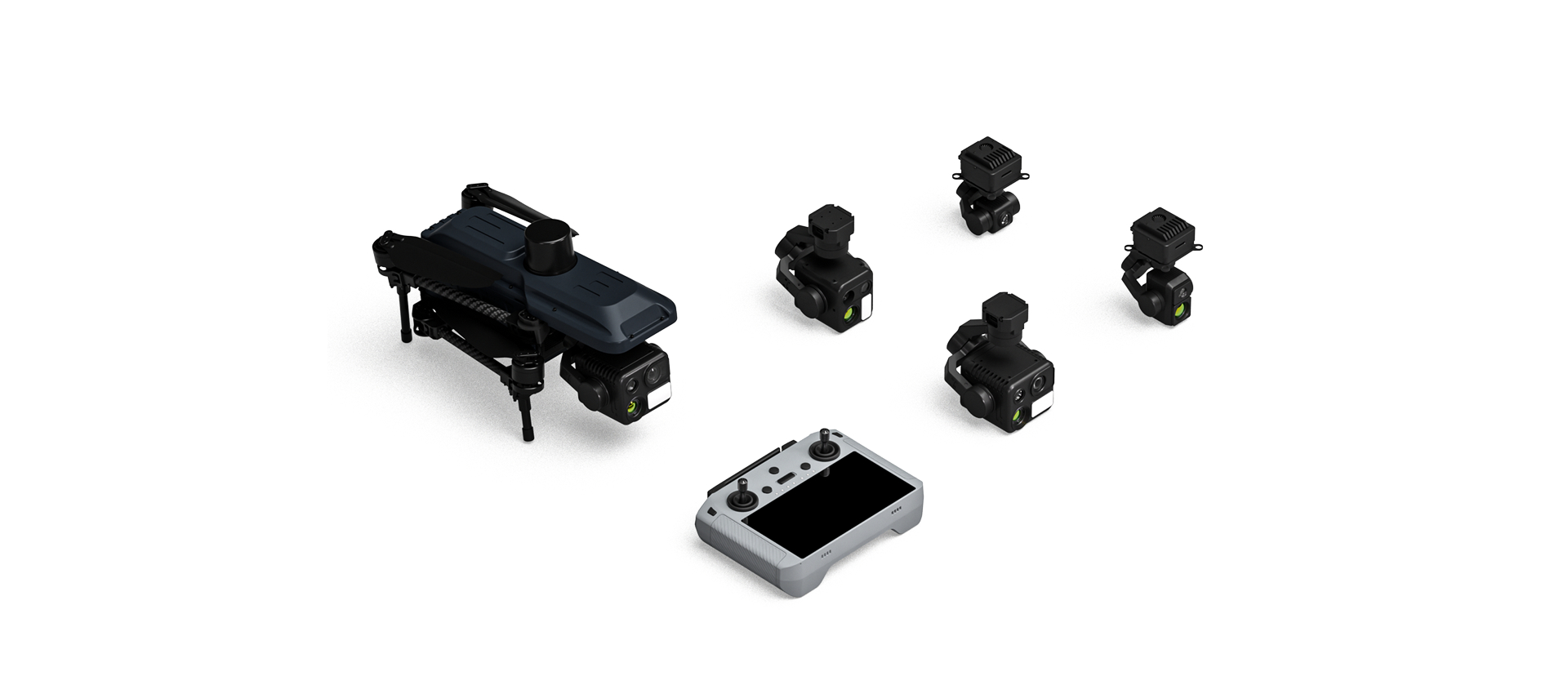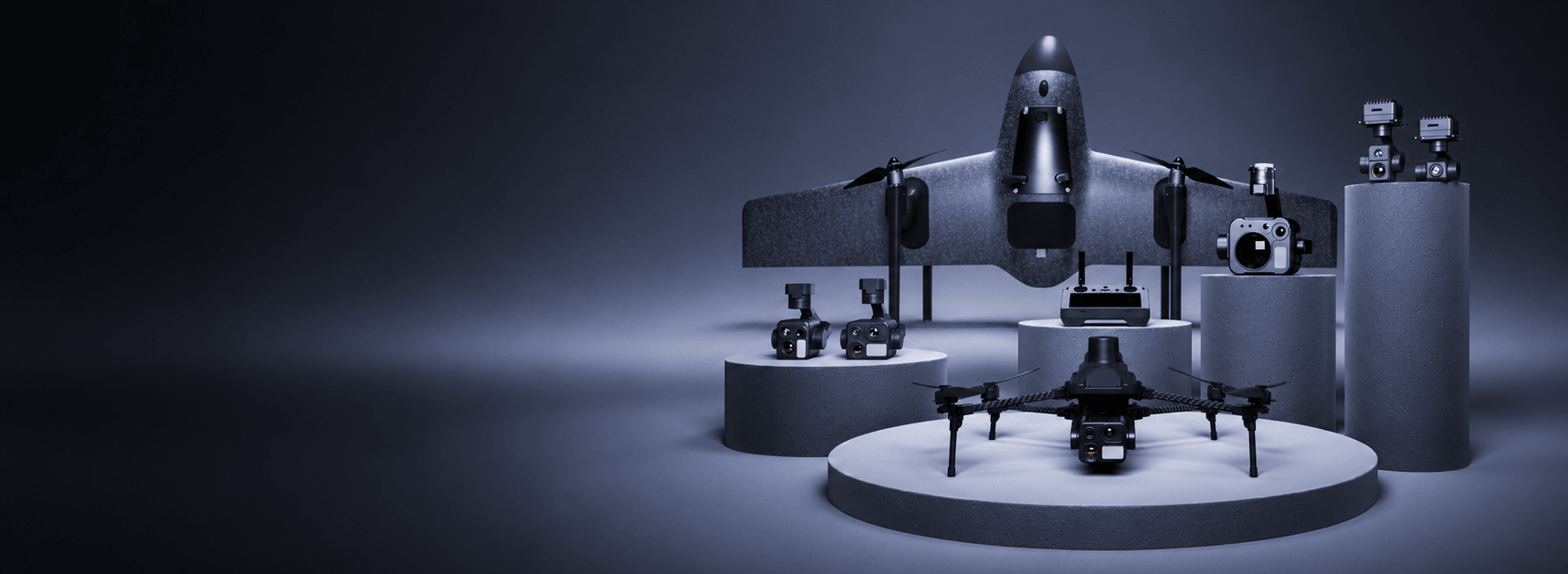
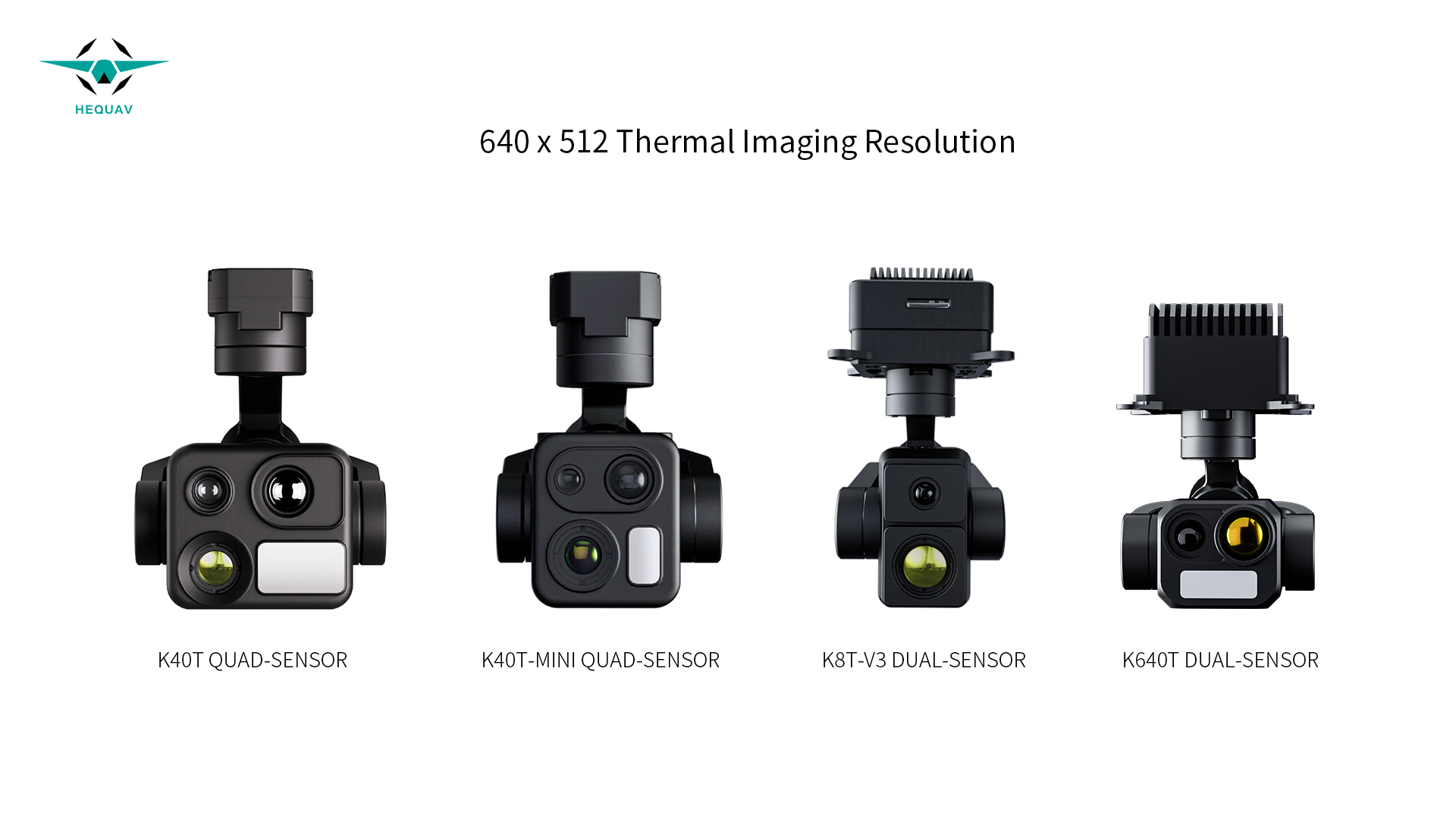
Four thermal drone payloads can use the same 640 x 512 detector resolution and still produce very different coverage and pixels on target. The reason is that pixel pitch, focal length and field of view work as one optical system.
This comparison looks at the thermal channels in the HEQ K40T, K40T-Mini, K8T-V3 and K640T. It then applies the same calculator-style pixel thresholds to common objects so procurement teams can see the tradeoff between wide-area coverage and stand-off detail.
The short answer is:
- K40T: The narrowest thermal FOV and smallest pixel footprint in this group, making it the strongest choice when thermal stand-off detail is the priority.
- K40T-Mini: Wider thermal coverage than K40T, with telephoto visible imaging and laser ranging in a lighter quad-sensor package.
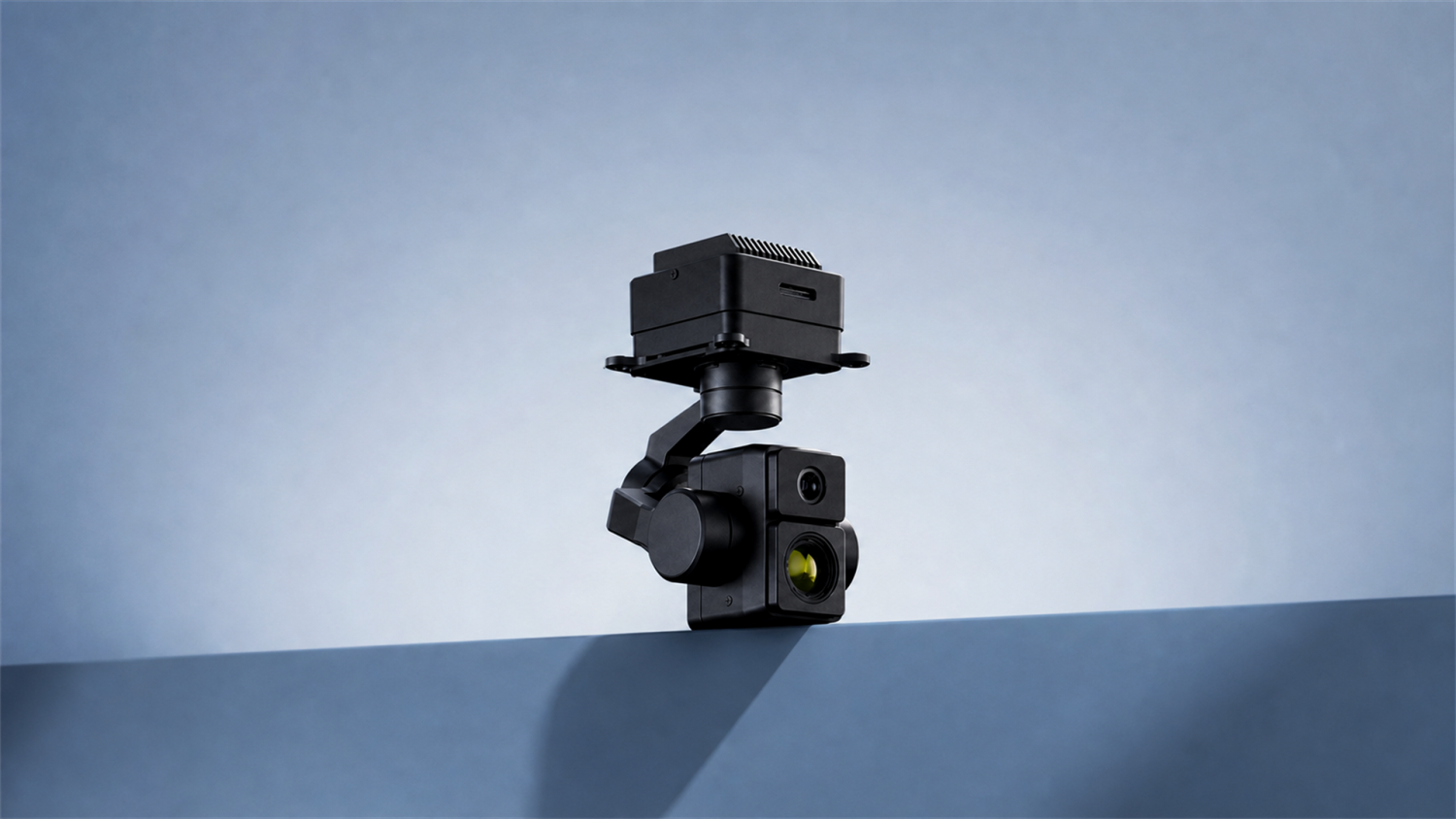
- K8T-V3: The same thermal geometry as K40T-Mini in a lighter dual-sensor configuration for missions that do not require a telephoto camera or rangefinder.
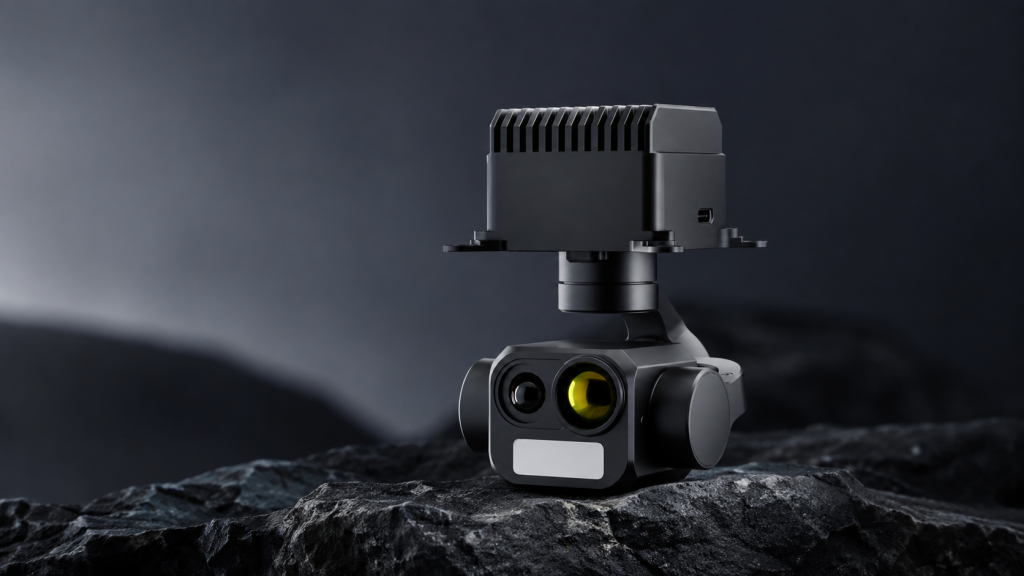
- K640T: Nearly the same calculated thermal detail as K40T-Mini and K8T-V3, with a slightly narrower published FOV and the lightest listed payload in this comparison.
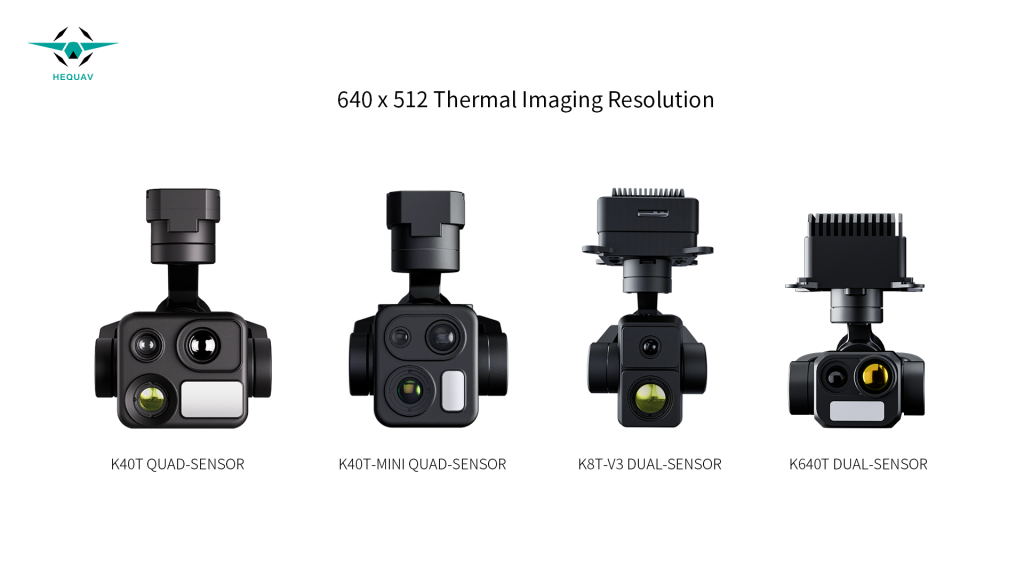
The specifications that control thermal range
All four products list a native thermal resolution of 640 x 512. Resolution alone therefore does not decide this comparison. The main differences are pixel pitch and lens focal length.
A useful first-order value is the instantaneous field of view for one pixel, or IFOV:
IFOV in milliradians is approximately pixel pitch in micrometers divided by focal length in millimeters.
A smaller IFOV places more pixels across the same object at the same distance. A larger IFOV covers more area but gives each object fewer pixels. This is why an 8 um pixel pitch does not automatically produce longer range than 12 um: the lens must be considered at the same time.
| Payload | Thermal geometry | Approx. IFOV | Approx. pixel footprint at 100 m | Approx. coverage at 100 m |
|---|---|---|---|---|
| K40T | 640 x 512, 12 um, 13 mm | 0.923 mrad | 92 mm | 60.2 x 47.8 m, using published 33.5 x 26.9 degree FOV |
| K40T-Mini | 640 x 512, 12 um, 9.1 mm | 1.319 mrad | 132 mm | 89.7 x 70.0 m, using published 48.3 x 38.6 degree FOV |
| K8T-V3 | 640 x 512, 12 um, 9.1 mm | 1.319 mrad | 132 mm | 89.7 x 70.0 m, using published 48.3 x 38.6 degree FOV |
| K640T | 640 x 512, 8 um, 6.1 mm | 1.31 mrad | 131 mm | 86.1 x 68.1 m, using published 46.6 x 37.6 degree FOV |
How the distance calculator works
The supplied calculator uses four inputs: focal length, pixel pitch, target size and the number of pixels required across that target. Its first-order equation is:
Range in meters = target size in meters x focal length in millimeters x 1,000 / (pixel pitch in micrometers x required pixels)
To reproduce the calculator example, this article uses:
- Detection: 1.5 pixels across the stated object dimension
- Recognition: 6 pixels
- Discrimination: 12 pixels
For a 1.7 m standing person and the K40T thermal channel, the geometric detection result is:
1.7 x 13 x 1,000 / (12 x 1.5) = approximately 1,228 m
This does not mean that a person will be reliably detected at 1,228 m in every flight. A 1.5-pixel result is a geometric threshold, not a field-performance guarantee. Teledyne FLIR explains that formal detection, recognition and identification performance is normally modeled with additional variables such as target contrast, atmosphere, optical quality, sensitivity, processing and probability of task completion. Its DRI guidance uses the NV-IPM model rather than focal length and pitch alone.
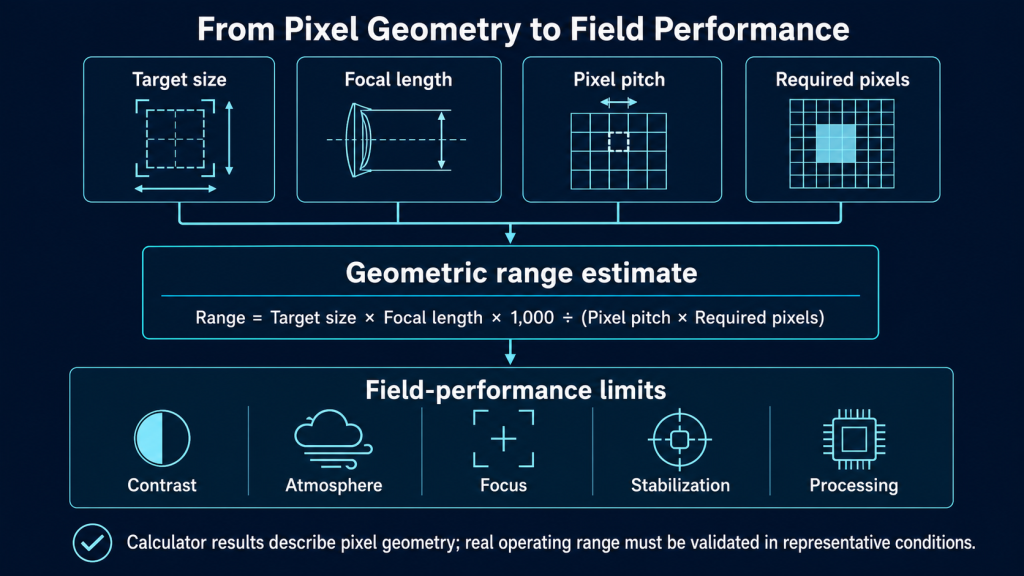
Calculator results describe pixel geometry; real operating range must be validated in representative conditions
Calculated distances for common objects
The table below uses the same 1.5 / 6 / 12-pixel thresholds for every payload. Each result is shown as detection / recognition / discrimination. Values are rounded to the nearest meter.
| Object and dimension used | K40T | K40T-Mini | K8T-V3 | K640T |
|---|---|---|---|---|
| Standing person, 1.7 m height | 1,228 / 307 / 153 m | 859 / 215 / 107 m | 859 / 215 / 107 m | 864 / 216 / 108 m |
| Passenger car, 1.8 m width | 1,300 / 325 / 163 m | 910 / 228 / 114 m | 910 / 228 / 114 m | 915 / 229 / 114 m |
| Passenger car, 4.5 m broadside length | 3,250 / 813 / 406 m | 2,275 / 569 / 284 m | 2,275 / 569 / 284 m | 2,288 / 572 / 286 m |
| Industrial component, 1.0 m | 722 / 181 / 90 m | 506 / 126 / 63 m | 506 / 126 / 63 m | 508 / 127 / 64 m |
| Small thermal feature, 0.2 m | 144 / 36 / 18 m | 101 / 25 / 13 m | 101 / 25 / 13 m | 102 / 25 / 13 m |
Why object orientation changes the answer
A car illustrates the limitation of entering one target size. A broadside passenger car may present approximately 4.5 m of length, while its front or rear may present only about 1.8 m of width. The calculator therefore gives a much longer broadside range even though the vehicle has not changed.
The same applies to a standing person, a person viewed from above, a narrow electrical component or a hot area partly hidden by the asset. Use the dimension that will actually appear across the camera’s image plane, not simply the object’s largest catalog dimension.
Which HEQ payload fits which mission?
| Payload | Listed weight | Sensor configuration | Best fit based on this comparison |
|---|---|---|---|
| K40T | 290 g +/- 5 g | Wide-angle visible, zoom telephoto, thermal and laser rangefinder | Longer thermal stand-off detail plus the most flexible visible confirmation workflow |
| K40T-Mini | 267 g +/- 5 g | Wide-angle visible, fixed telephoto, thermal and laser rangefinder | Balanced thermal coverage with multi-sensor confirmation and ranging in a smaller package |
| K8T-V3 | 147 g +/- 5 g | Wide-angle visible and thermal | The same thermal coverage and range geometry as K40T-Mini when telephoto and ranging are not required |
| K640T | 120 g +/- 5 g | Visible, thermal and laser rangefinder | K40T-Mini/K8T-class thermal detail in the lightest listed package, with a slightly narrower thermal view and laser ranging |
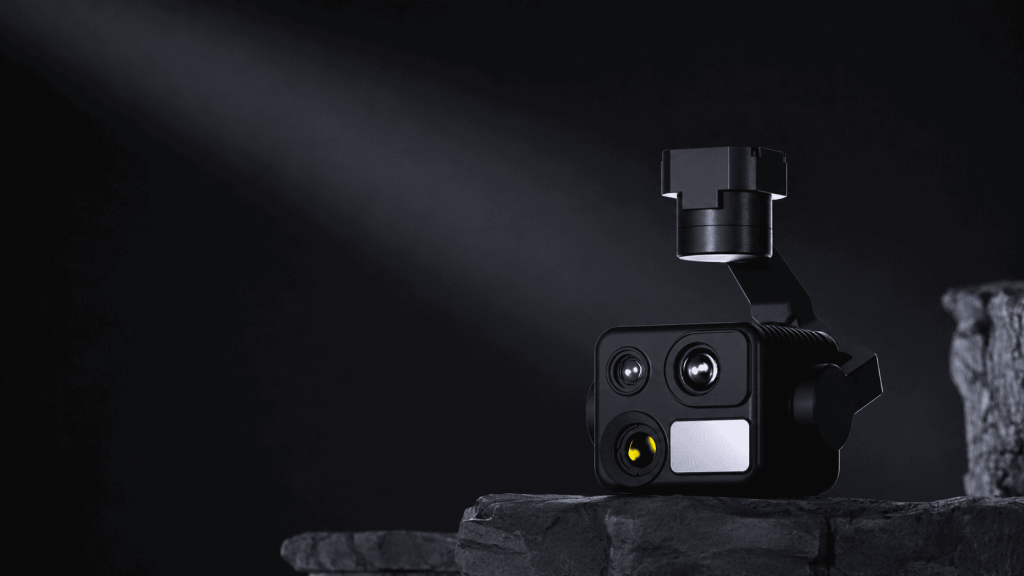
Choose K40T when stand-off thermal detail matters most
K40T has the longest focal length relative to its 12 um pitch, producing the smallest approximate IFOV in this group. It therefore places the most thermal pixels across the same object at the same distance. Its wide-angle, zoom telephoto, thermal and rangefinder channels also support a more complete detection-to-visible-confirmation workflow.
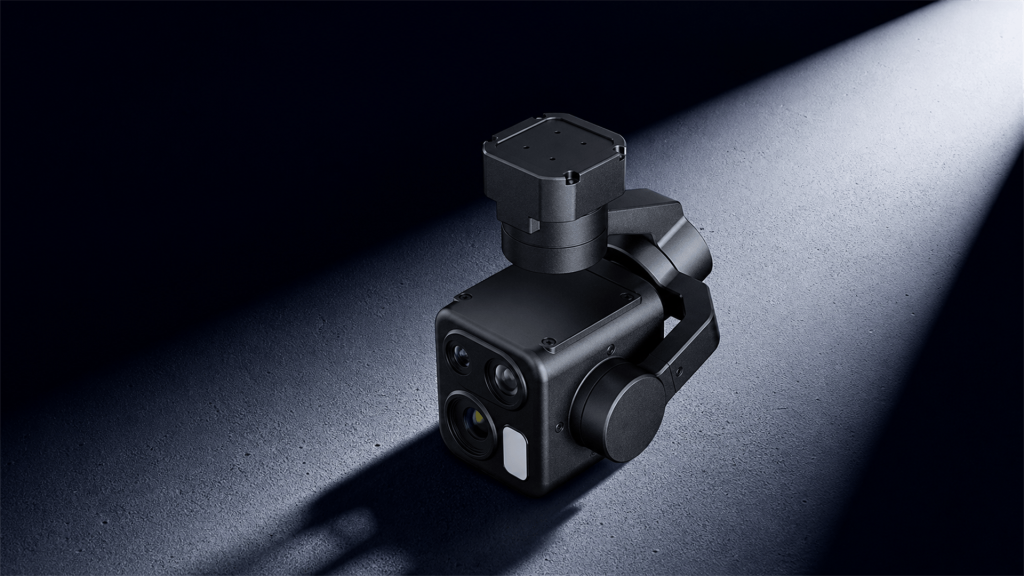
Choose K40T-Mini when you need four sensors with wider thermal context
K40T-Mini trades some thermal stand-off detail for a wider view while retaining wide-angle visible imaging, fixed telephoto imaging and laser ranging. It is a practical middle option when coverage, sensor diversity and package size must be balanced.
Choose K8T-V3 when thermal plus visible is enough
K8T-V3 and K40T-Mini have the same listed thermal resolution, pitch, focal length and horizontal/vertical FOV. Their theoretical thermal range is therefore the same. The choice is mainly about payload architecture: K8T-V3 is much lighter, while K40T-Mini adds telephoto visible imaging and a laser rangefinder.
Choose K640T for low weight with comparable thermal detail
K640T combines an 8 um pixel pitch with a 6.1 mm F1.0 thermal lens. Its approximate 1.31 mrad IFOV produces calculator-style distances that are almost identical to K40T-Mini and K8T-V3. Its published 46.6 x 37.6 degree FOV is slightly narrower, while its listed 120 g weight and laser rangefinder make it attractive where payload mass, thermal detail and distance data all matter.
How to use these numbers in procurement
- Define the smallest object or thermal feature that matters.
- Use the dimension that will face the camera in the expected viewing geometry.
- Choose a conservative pixel requirement instead of relying only on the 1.5-pixel detection threshold.
- Calculate a first-order distance using focal length and pixel pitch.
- Check field of view to make sure the payload can cover the required area efficiently.
- Validate the result with original thermal footage at known distances, representative weather, aircraft motion and target contrast.
- Evaluate the complete payload: visible confirmation, ranging, weight, integration and recording may change which product is the best operational solution.
The practical takeaway
Pixel pitch is not a range ranking by itself. K40T uses a larger 12 um pitch than K640T’s 8 um pitch, yet its longer 13 mm lens produces a smaller angular pixel and a longer calculator-style distance. K640T reaches almost the same IFOV as K40T-Mini and K8T-V3 by pairing its smaller pixels with a shorter 6.1 mm lens. When angular pixel size is this close, the procurement decision moves to FOV, weight, additional sensors and integration requirements.
Use the calculations to narrow the shortlist, not to replace a field demonstration. HEQ can repeat the calculation with your actual object dimensions, working distance and evidence requirements before recommending a payload.
Ask HEQ to Compare Your Target Distance
Frequently asked questions
Does smaller pixel pitch always mean longer thermal detection range?
No. Pixel pitch must be evaluated with focal length. A smaller pitch paired with a much shorter lens can produce a wider angular pixel and fewer pixels across a distant object.
Why do K40T-Mini and K8T-V3 have the same calculated distances?
They list the same 640 x 512 resolution, 12 um pixel pitch and 9.1 mm thermal focal length. Their thermal geometry is therefore the same even though the complete payloads have different sensors and weights.
Are the calculated distances guaranteed?
No. They are first-order geometric estimates. Real results depend on thermal contrast, atmosphere, weather, focus, lens quality, detector sensitivity, stabilization, viewing angle, display, compression, processing and the operator or algorithm.