A thermal camera can reveal an unusual heat pattern, but it may not show enough visible detail to explain what produced it. For many inspection and civilian patrol missions, the more useful question is not whether a drone has thermal imaging. It is whether the payload can move efficiently from detection to context and then to confirmation.
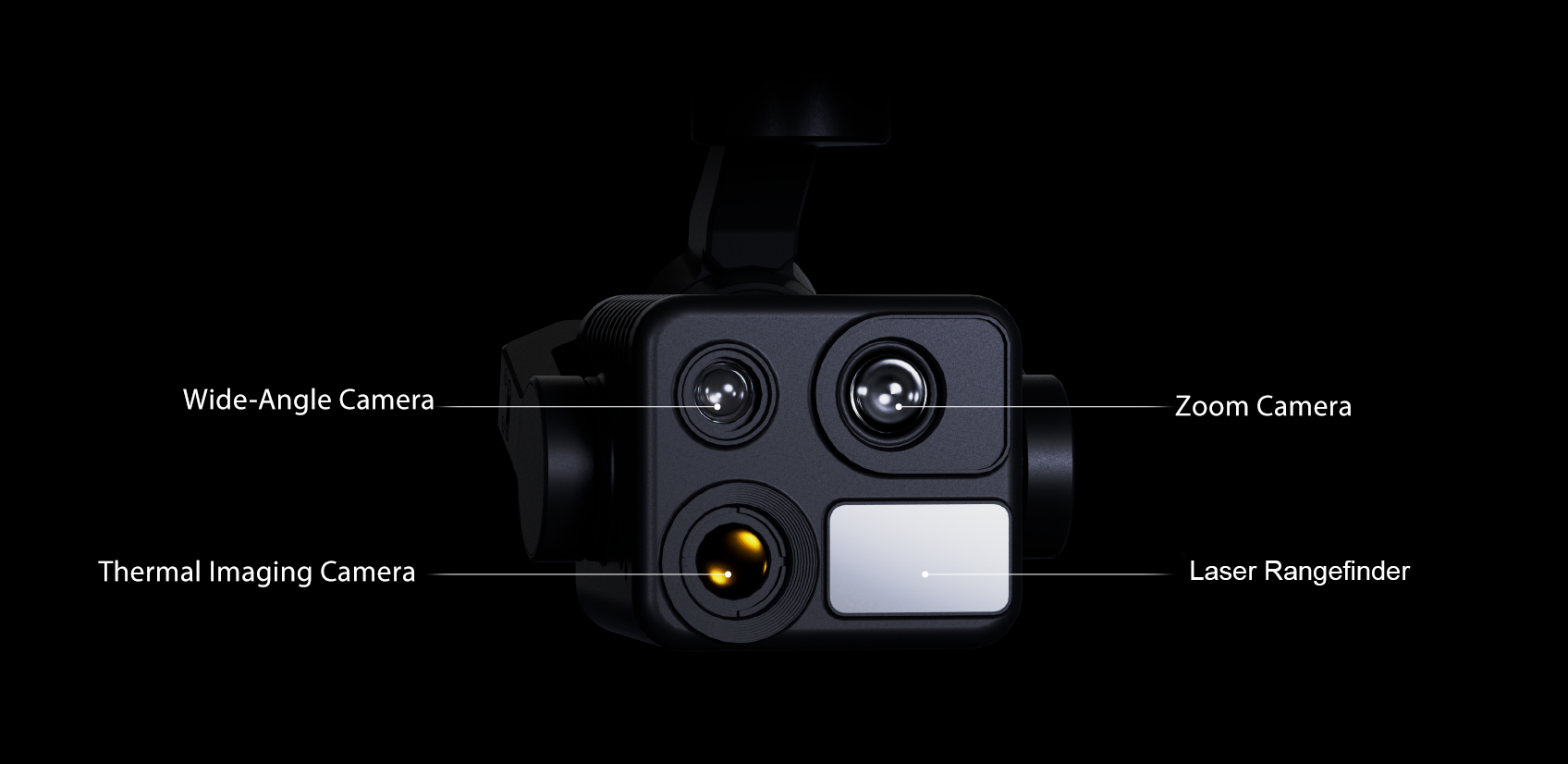
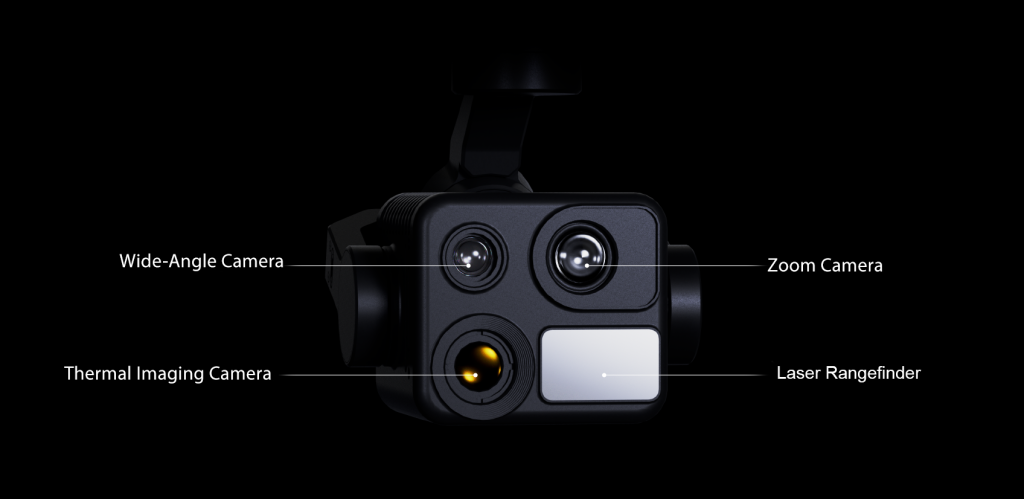
That is why professional multi-sensor payloads often combine three different views: a wide-angle camera for orientation, a thermal camera for finding heat contrast, and a telephoto camera for inspecting visible details from a practical stand-off distance. Each sensor answers a different operational question.
- Wide-angle camera: Where is the target in the wider scene?
- Thermal camera: Where is there a potentially relevant temperature contrast?
- Telephoto camera: What visible detail can be confirmed without moving unnecessarily close?
The value is not simply having more cameras. It is being able to use them as one repeatable workflow.
Why one camera view is rarely enough
Inspection teams need coverage and detail, but a single lens cannot maximize both at the same time. A wide field of view makes it easier to locate an asset, follow its geometry and retain awareness of the surrounding structure. A narrow field of view places more of the available pixels on a smaller area, which helps an operator examine distant visual features.
Focal length is only part of this relationship. Sensor size and working distance also affect the field of view and the area represented in an image. An optics calculation therefore has to consider the complete imaging system, not a focal-length number in isolation. Edmund Optics’ field-of-view guide provides a useful technical explanation of this relationship.
Thermal imaging introduces another layer. It represents infrared radiation as image contrast rather than reproducing the visible appearance of the asset. That contrast can make a possible anomaly easier to notice, while a visible camera helps the operator identify the component, surrounding material and physical condition.
A practical multi-sensor workflow separates three tasks: find the area, detect the contrast and confirm the visible context.
The wide-angle camera: orientation before magnification
The wide-angle channel is the operator’s map. It helps establish which roof section, insulator string, solar array, facade or perimeter segment is being observed. This context becomes especially important when an asset contains repeated components that look similar at high magnification.
A wide view supports several parts of the mission:
- Initial search: Scan a larger area without constantly moving the gimbal.
- Target acquisition: Place the area of interest near the center before changing cameras or zoom level.
- Spatial context: Show where a detail sits in relation to the complete asset.
- Operator awareness: Reduce the tunnel-vision effect that occurs at long focal lengths.
- Report traceability: Capture an establishing image that helps reviewers understand the later close-up.
For example, the HEQ K40T specification table lists a 48 MP, 1/2-inch wide-angle camera with a 4.49 mm focal length and a horizontal field of view of 71 degrees. Those numbers describe a channel intended to retain broad scene coverage. The field result still depends on distance, atmospheric conditions, motion, focus, processing and the size of the feature being inspected.
Use the wide-angle channel to locate the target and preserve asset context before zooming.
The telephoto camera: visible confirmation from stand-off distance
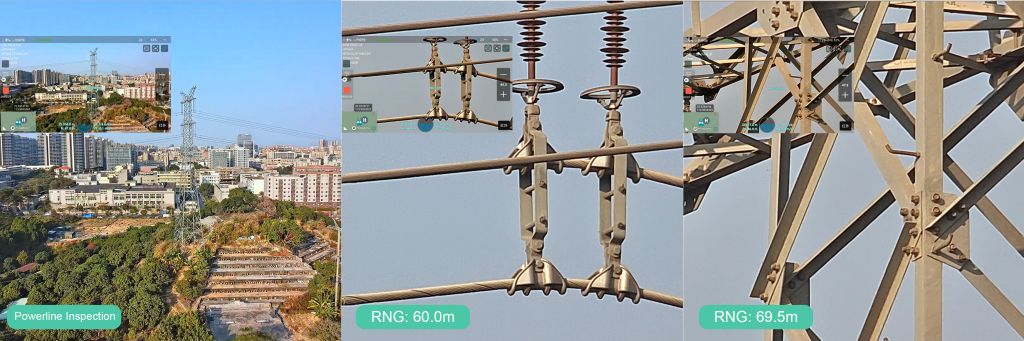
Once the operator has located an area of interest, the telephoto channel can place more visible-image detail on that smaller part of the scene. This can reduce the need to fly closer merely to enlarge a bolt, connector, insulator, roof detail, identification marking or other visible feature.
Stand-off distance matters because “closer” is not always the best or safest inspection strategy. Asset geometry, energized equipment, turbulence, obstacles, site rules and the aircraft’s own operating limits may constrain the available flight path. A telephoto camera gives the mission planner another way to obtain visible detail, although it does not remove the need for a safe and compliant flight plan.
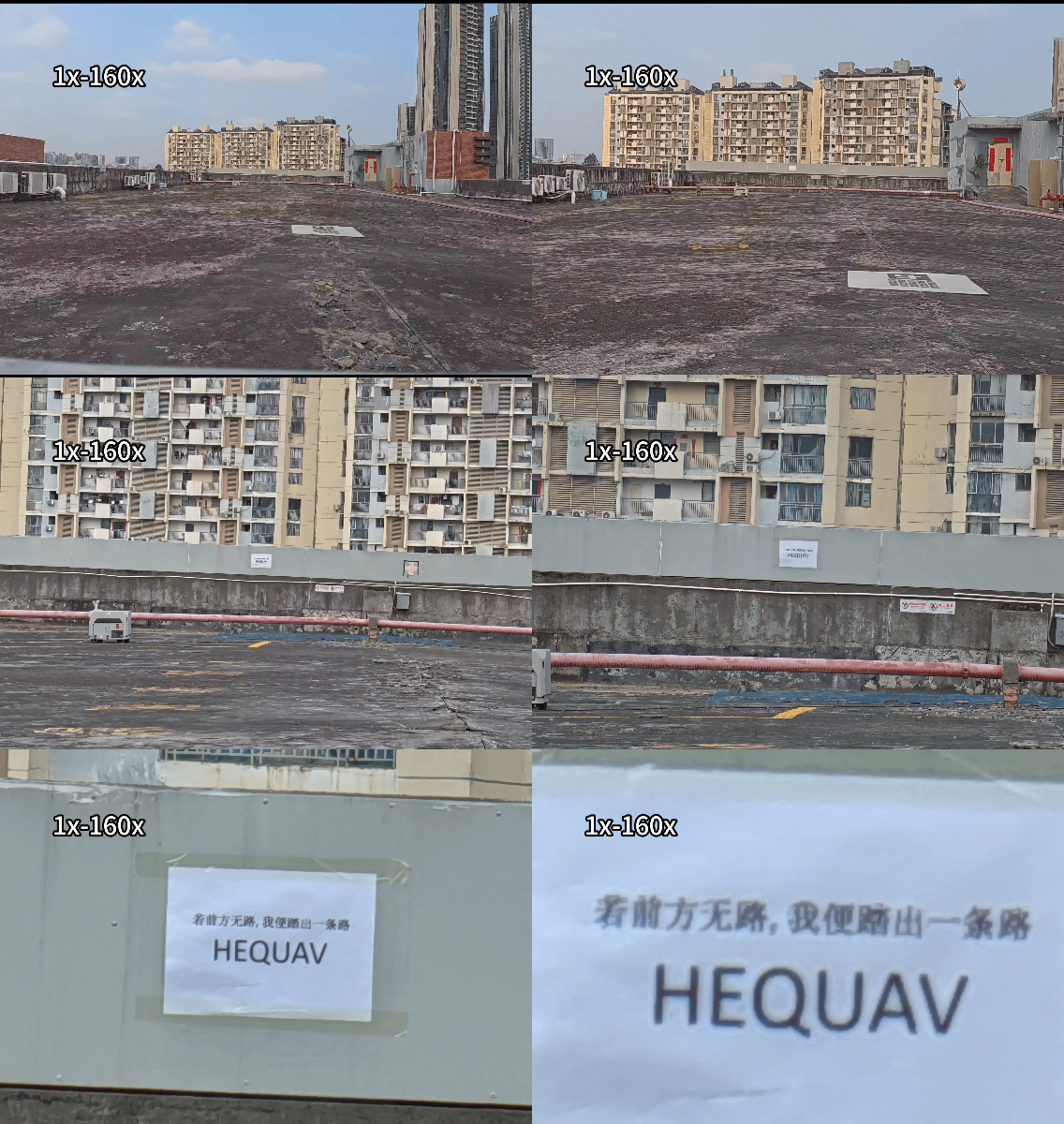
The K40T specification table lists a separate 48 MP, 1/2-inch telephoto camera with a 15.2–50 mm focal-length range. Treat the optical system, digital processing and the advertised maximum hybrid zoom as different concepts. Optical magnification changes the image formed by the lens. Digital or hybrid zoom can enlarge and process the captured image, but it cannot guarantee new recoverable detail at every magnification level.
K40T zoom demonstration. Image usefulness at any zoom level depends on distance, target size, focus, stability, visibility and atmospheric conditions.
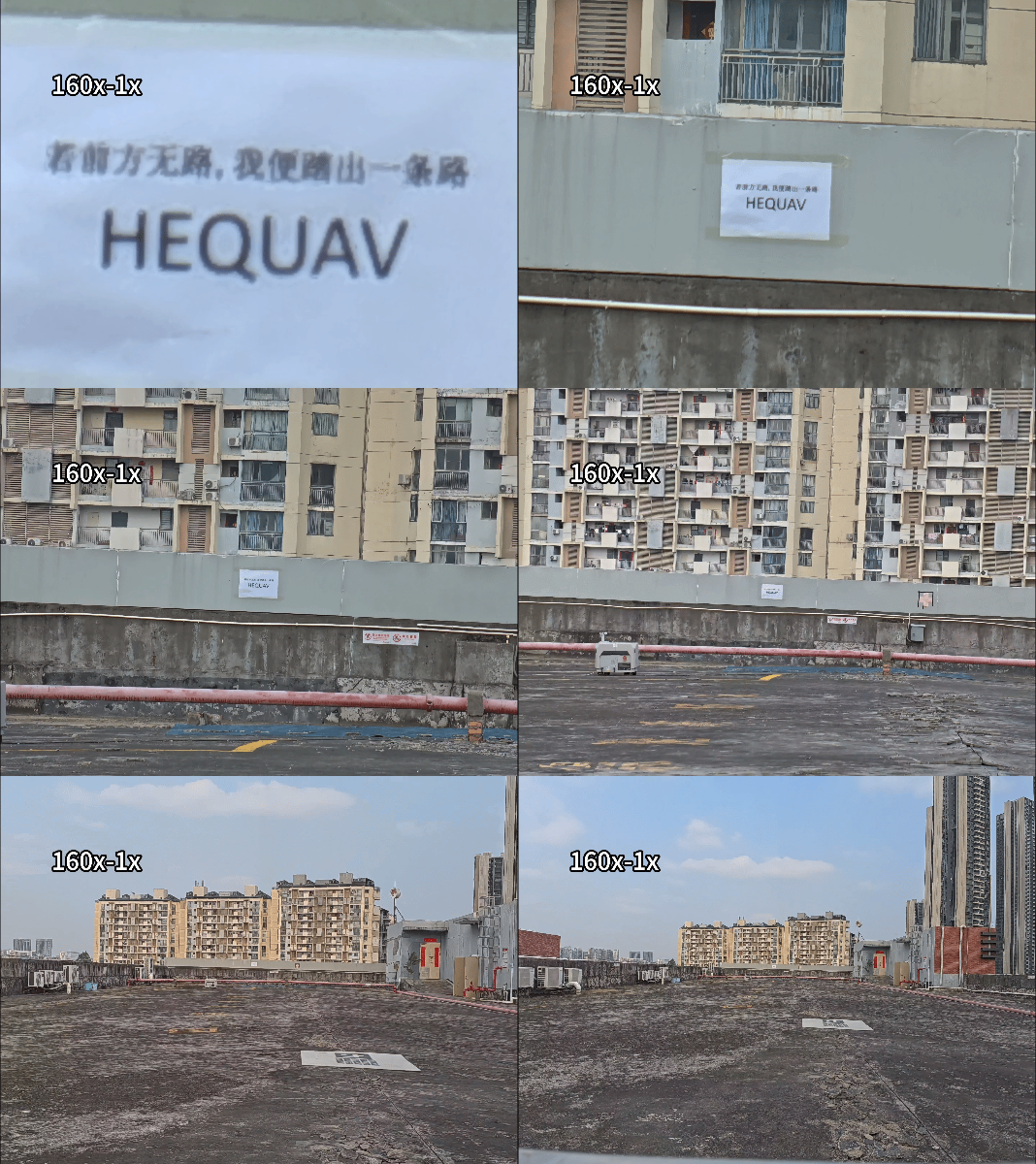
The return from high magnification is also operationally important. After inspecting a small feature, the operator needs to re-establish orientation quickly. Switching back to the wide view is usually faster and more reliable than trying to navigate a complex structure while remaining at maximum zoom.
The thermal camera: detection, not automatic diagnosis
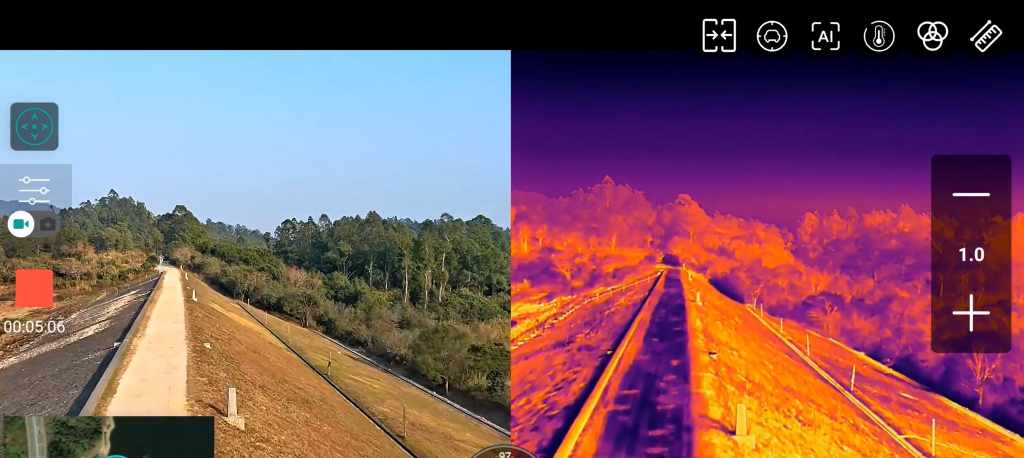
A thermal channel is valuable because it can reveal contrast that is weak or invisible in a standard RGB image. Depending on the asset and inspection method, an unusual pattern may justify a closer review for electrical loading, insulation behavior, moisture-related effects, friction, blocked heat transfer or another operating condition.
However, a thermal image is not an automatic defect diagnosis. Apparent temperature and thermal contrast can be influenced by emissivity, reflected radiation, viewing angle, distance, weather, solar loading, focus and the time at which the asset is observed. A qualified reviewer still needs operating context and an appropriate inspection method.
The K40T product page lists a 640 × 512 VOx thermal detector, 12 μm pixel pitch, 25/50 Hz frame rate and a 13 mm lens. It does not publish a temperature-measurement range or accuracy in the current specification table. For that reason, this article treats the thermal channel as an imaging and anomaly-detection tool rather than making an unsupported radiometric accuracy claim.
This distinction is consistent with established aerial inspection practice: a wider thermal view can support area coverage, while a narrower view can place more detector pixels on a small area when the aircraft must remain farther away. A FLIR aerial thermography example describes using different thermal lens angles for overview and detailed recording at altitude.
Thermal contrast identifies an area for review; the visible image records its physical context.
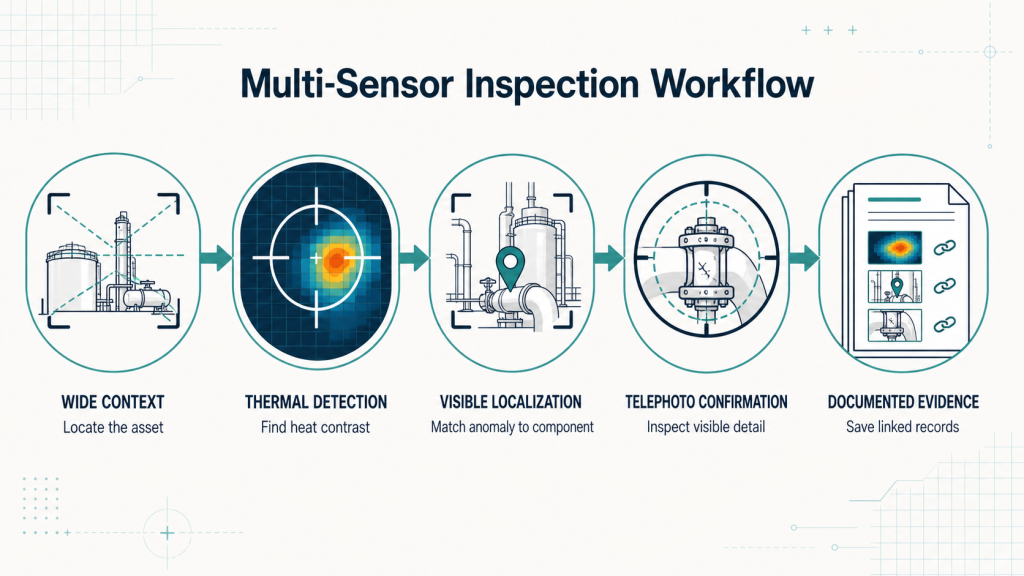
A repeatable wide–thermal–telephoto inspection workflow
The most useful sensor sequence depends on the mission, but the following workflow provides a practical starting point.
1. Establish the scene with the wide camera
Record an overview before inspecting individual features. Include enough of the structure or site to make the target recognizable later. If the asset contains repeated sections, follow a consistent order and naming convention.
2. Scan for relevant thermal contrast
Use the thermal channel under suitable environmental and operating conditions. Note weather, distance, viewing angle, asset load and other information required by the inspection procedure. Mark a thermal pattern as an observation requiring review—not as a confirmed failure.
3. Return to visible context
Use the wide camera to confirm the exact component or surface associated with the thermal pattern. This step reduces the risk of assigning a close-up to the wrong part of a repetitive asset.
4. Inspect visible detail with the telephoto camera
Increase magnification gradually while maintaining focus and gimbal stability. Capture the useful frame before pushing to the maximum available zoom. Maximum zoom is a capability limit, not a default operating setting.
5. Save a connected evidence set
Retain the overview, thermal frame and telephoto detail together. Where the workflow supports it, also record time, aircraft position, gimbal angle, range, target identifier and relevant environmental conditions. A reviewer should be able to move from the close-up back to the original scene without guessing.
What this workflow changes in real applications
Building and roof inspection
The wide view records the roof zone or facade elevation. Thermal imaging highlights a pattern that may warrant review. The telephoto channel then documents visible conditions such as flashing, seams, penetrations, drainage features or surface damage from a suitable flight position. The evidence still requires interpretation by a qualified building or thermography professional.
Solar and electrical assets
The wide camera keeps the module row, string or equipment bay identifiable. Thermal contrast can direct attention to a particular area. Telephoto imagery helps document visible contamination, physical damage, connector condition, labeling or other external details. Thermal findings should be interpreted with operating load and environmental conditions recorded.
Industrial site and civilian perimeter patrol
A wide view supports route awareness and scene context. Thermal imaging may help an authorized operator notice a heat-emitting object under poor visible-light conditions. Telephoto imagery can provide a closer visible assessment while the aircraft remains at an appropriate distance. Deployments must follow applicable aviation, privacy, data-retention and site-authorization requirements.
Specifications procurement teams should examine
Camera count alone does not show whether a payload will fit an operating workflow. A useful evaluation should connect each specification to a field requirement.
| Evaluation item | Why it matters | What to request |
|---|---|---|
| Wide and telephoto field of view | Determines scene coverage and detail framing at the planned working distance | Uncropped sample frames at known distances |
| Optical, digital and hybrid zoom definitions | Prevents a maximum zoom number from being mistaken for guaranteed identification detail | Optical range, output resolution and processing description |
| Minimum focus distance | Some zoom positions may not focus at close range | Focus limits across the zoom range |
| Thermal detector and lens | Affects field of view and the number of detector pixels placed on a target | Native resolution, pixel pitch, frame rate, lens and FOV |
| Radiometric capability | Thermal imaging and calibrated temperature measurement are not the same deliverable | Measurement range, accuracy, conditions and file format if required |
| Sensor switching and recording | Determines whether paired evidence can be captured without losing the target | Live demonstration and original files |
| Stabilization | High magnification amplifies motion and vibration | Flight samples at representative wind and zoom levels |
| Integration | A payload must exchange video, control and metadata with the aircraft and ground system | Interfaces, protocol documentation and compatibility test |
| Weight, power and protection | Affects endurance, platform compatibility and environmental limits | Installed-weight and power-budget review |
K40T multi-sensor configuration at a glance
The current K40T product-page specification table lists the following configuration. Specifications should be verified again against the applicable model and firmware before procurement or publication.
| Channel or system | Published specification | Operational role |
|---|---|---|
| Wide-angle camera | 48 MP; 1/2-inch sensor; 4.49 mm focal length; 71° horizontal FOV | Search, orientation and context |
| Telephoto camera | 48 MP; 1/2-inch sensor; 15.2–50 mm focal-length range | Visible-detail inspection |
| Thermal camera | 640 × 512 VOx detector; 12 μm; 25/50 Hz; 13 mm lens | Thermal contrast and anomaly detection |
| Laser rangefinder | 5–1200 m measurement range; ±1 m stated accuracy; 0.1 m distance resolution | Distance information where supported by the workflow |
| Gimbal | Three-axis mechanical stabilization; 290 g ±5 g; IP54; 12 W | Stabilized multi-sensor integration |
Questions to ask during a payload demonstration
- Can the operator move from wide to thermal to telephoto without losing the selected target?
- Can the system record synchronized or clearly associated visible and thermal evidence?
- What happens to image detail, focus and latency as magnification increases?
- Are sample images available at the same distance, lighting and processing settings?
- Does the thermal channel provide imaging only, or documented radiometric measurement?
- Which metadata is stored with photos and video?
- Are the payload’s weight, power, interfaces and protocols compatible with the intended aircraft?
- What performance limitations apply in low contrast, poor visibility, wind or long atmospheric paths?
The practical takeaway
A drone with a thermal camera becomes more useful when operators can connect a thermal observation to a location and then to visible evidence. The wide-angle camera prevents the inspection from losing context. The thermal camera helps reveal contrast worth investigating. The telephoto camera supports visible confirmation from an appropriate distance.
For procurement teams, the right question is therefore not “How much zoom does the payload have?” It is “Can this payload produce a traceable detection-to-confirmation workflow under our real operating conditions?”
Discuss K40T compatibility with the HEQ Tech Team
Frequently asked questions
Does every drone with a thermal camera need a telephoto camera?
No. A wide visible camera and thermal camera may be sufficient for close-range work or missions where detailed visible confirmation is not required. A telephoto channel becomes more valuable when the aircraft must maintain stand-off distance or when small visible features affect the decision.
Is hybrid zoom the same as optical zoom?
No. Optical zoom changes magnification through the lens system. Digital zoom enlarges captured image data, while hybrid zoom can combine optical magnification with cropping and processing. Buyers should compare original files at known distances instead of relying only on a maximum zoom number.
Can a thermal image identify the exact cause of a defect?
Usually not by itself. A thermal pattern is evidence that must be interpreted using asset condition, load, materials, weather, viewing geometry and the applicable inspection method. Visible images and other tests may be needed before determining the cause.
Why capture a wide image if a telephoto close-up is clearer?
The wide image proves where the close-up came from. Without it, a reviewer may be unable to identify the component or repeat the inspection accurately, especially on structures with many similar features.
What evidence should a buyer request before selecting a payload?
Request unedited wide, thermal and telephoto files captured at documented distances and conditions. Also request interface documentation, focus limits, thermal measurement specifications if applicable, and an integration test using the intended aircraft and ground-control system.